

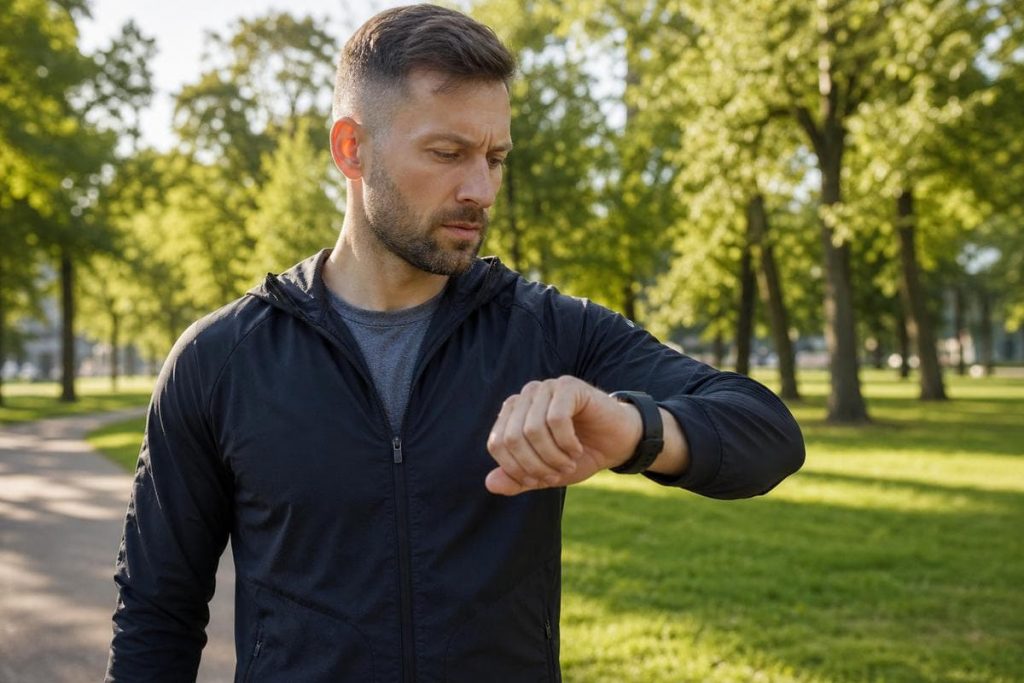
Smartwatches and fitness trackers have become part of everyday life because they make it possible to quickly obtain information about your health without complex equipment. However, wearable health gadgets are useful primarily as tools for monitoring trends rather than as a way to make a diagnosis: it is important to understand where their readings are informative and where they may create a false sense of control.
What Smartwatches Can Actually Measure
When considering what smartwatches can actually measure in real-world use, basic physiological parameters and behavioral metrics provide the greatest value. At the same time, modern smartwatches measure heart rate, step count, blood oxygen saturation, and sleep quality with reasonable accuracy — but each of these indicators has its own margin of error, depending on the type of sensor, quality of skin contact, hand movement, ambient temperature, and the specific algorithms used. The health features of smartwatches are particularly useful for tracking trends: whether resting heart rate has changed, whether sleep duration has decreased, or whether daily activity has declined. This is valuable for preventive health monitoring, but the numbers should be interpreted in the context of existing medical conditions, medications, and physical fitness.
Heart Rate and Heart Rhythm
One of the most established functions of wearable electronics is heart rate monitoring using photoplethysmography. Under normal conditions, the optical heart rate sensor in a smartwatch is reasonably accurate at rest, but during intense exercise or arrhythmia its readings may differ significantly from the actual heart rate, because the algorithm analyzes changes in blood volume in the vessels rather than the heart’s direct electrical activity. Therefore, smartwatch heart rate accuracy is generally good at rest but decreases noticeably during running, interval training, hand tremors, cold hands, and irregular heart rhythms.
- at rest the margin of error is 1–3 beats per minute which is acceptable
- during running and strength training the error may reach 10–20 beats
- the ECG function in modern watches can detect atrial fibrillation but does not replace a clinical examination
- irregular heart rhythm notifications require confirmation by a cardiologist
The ECG function in smartwatches is usually based on a single-lead recording, which can help identify suspected atrial fibrillation but cannot detect the full range of conduction disorders, ischemic changes, or structural heart disease. If a watch regularly shows a high resting heart rate, episodes of tachycardia, palpitations, or irregular rhythm alerts, a doctor will be interested not in individual readings but in the frequency of episodes, their relationship to physical activity and symptoms, and the time of day when they occur. Standard ECG, Holter monitoring, and sometimes echocardiography and laboratory testing are used for confirmation.
Blood Oxygen Level SpO2
SpO2 measurement in wearable devices is also based on an optical method, but in a simplified form compared with medical pulse oximeters. Therefore, the pulse oximeter in a smartwatch provides approximate information about blood oxygen saturation, but its readings may be unreliable with dark skin, poor device fit, or movement. Results can be affected by watch position, sweat, tattoos, low perfusion in cold conditions, and hand movements. For this reason, smartwatch SpO2 measurements tend to be more accurate at rest, when the device fits properly and measurements are repeated.
In everyday life, smartwatch blood oxygen readings can be used as an additional reference point, for example when monitoring recovery after a respiratory infection, during sleep when sleep apnea is suspected, or at high altitude. However, a single brief decrease does not necessarily indicate hypoxemia. Persistent abnormalities are more clinically significant, especially when accompanied by shortness of breath, weakness, bluish lips, snoring, or daytime sleepiness. Medical assessment uses a certified pulse oximeter, physical examination, and, when necessary, pulmonary function testing or polysomnography.
Sleep Monitoring
Sleep tracking is one of the most popular features of wearable devices because subjective assessment of nighttime rest is often inaccurate. Nevertheless, smartwatches determine sleep stages based on movement and heart rate rather than brain waves, so their data on deep sleep and REM stages are approximate. This means that smartwatch sleep monitoring is reasonably accurate for total sleep duration and approximate sleep onset time, but significantly less accurate for the detailed structure of sleep, which in medicine is assessed using electroencephalography, eye movements, breathing, and muscle tone.
- total sleep duration — a reasonably accurate indicator
- number of awakenings — approximately 70–80% accuracy
- deep sleep and REM sleep — approximate data with a high margin of error
- sleep quality score — a marketing metric without a standardized methodology
When discussing sleep stages measured by smartwatches, it is important to remember that algorithms from different brands use their own models, so comparing percentages of deep sleep between different devices is not appropriate. It is more useful to look at recurring changes — later sleep onset, frequent awakenings, reduced total sleep duration, or an increase in nighttime heart rate. Such patterns may indirectly indicate stress, alcohol consumption, overtraining, obstructive sleep apnea, or poor sleep hygiene, but they do not replace clinical diagnosis.
What Smartwatches Cannot Do Despite Marketing Claims
Marketing often creates the impression that wearable electronics are almost equivalent to a home laboratory, although this is not the case. In practice, cuffless blood pressure measurement, glucose monitoring, and stress analysis through sweat are functions that remain marketing exaggerations in most consumer devices. This is where the limitations of smartwatches for health monitoring are most apparent: many indicators are calculated indirectly from secondary signals rather than measured directly.
When considering what smartwatches cannot do, cuffless blood pressure measurement cannot yet be regarded as a complete replacement for a blood pressure monitor, especially for people with hypertension, arrhythmias, vascular diseases, and older adults. Noninvasive glucose monitoring in mass-market smartwatches also does not provide sufficient clinical accuracy for diabetes management. Indicators such as “stress,” “biological age,” “energy,” or “readiness” usually reflect proprietary algorithms that process heart rate variability, sleep, and activity data but are not independent medical diagnoses. These data can be used as lifestyle indicators rather than as a basis for changing treatment.
When Smartwatch Data Should Be Shown to a Doctor
Wearable electronics provide the greatest benefit when they help identify persistent abnormalities in time. If you consistently have a high resting heart rate, frequent irregular rhythm notifications, persistently low SpO2, or sudden changes in sleep patterns, these are reasons to consult a doctor rather than self-treat, especially if symptoms such as chest pain, fainting, shortness of breath, severe weakness, morning headaches, snoring, or reduced exercise tolerance are present. The question of when to show smartwatch data to a doctor is usually determined not by a single alarming measurement but by its recurrence, duration, and combination with symptoms.
Screenshots of ECG recordings, heart rate logs, nighttime SpO2 trends, and sleep and activity data collected over several weeks can be useful to a specialist. This approach helps distinguish a random measurement error from clinically significant changes. Smartwatches and medical diagnostics can complement each other when the data are interpreted together with medical history, physical examination, and confirmatory tests. The most reliable approach is to use devices and features that have been evaluated in comparative clinical studies, while final decisions about diagnosis and treatment should be based on standard evidence-based medical methods and current clinical guidelines. Therefore, when answering the question of what smartwatches can really tell you, it is more accurate to describe them not as a “diagnosis on your wrist,” but as a useful tool for long-term health monitoring.