

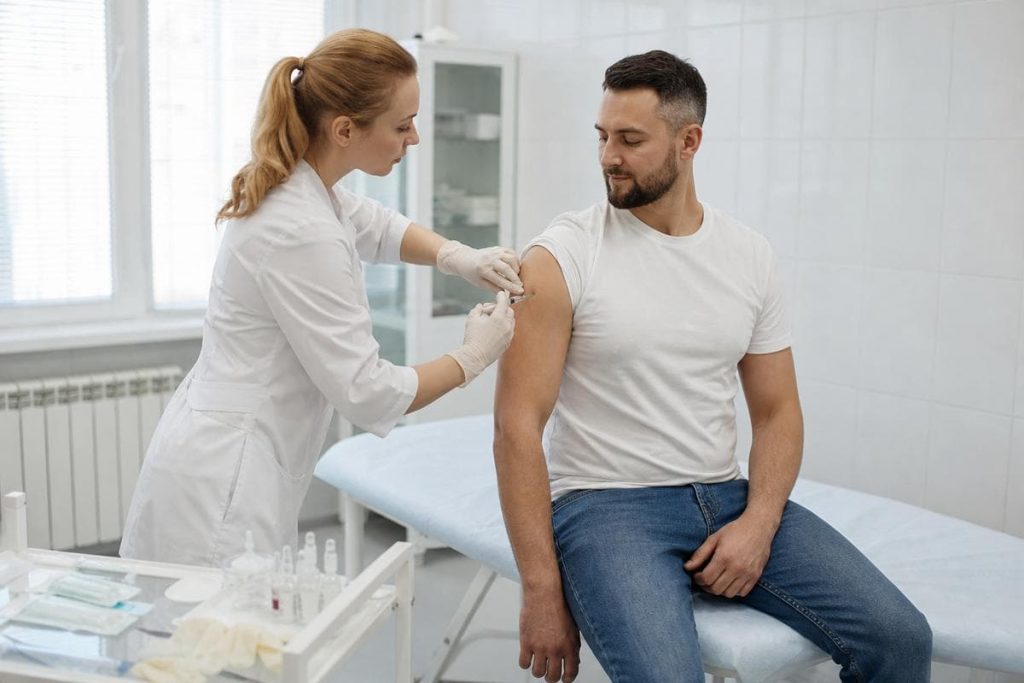
Many people perceive vaccination as a stage that ends with the childhood immunization schedule. In practice, adult vaccination remains an important part of preventive healthcare because protection against a number of infections decreases over time, while the risk of severe illness increases with age. This information helps explain which vaccinations after the age of 30 are actually relevant and how to understand your own vaccination status.
Why Adults Need Vaccinations
The immune system changes throughout life: some post-vaccination protection lasts for decades, but for certain infections this is not enough. At the same time, immunity from many childhood vaccinations weakens after 10–20 years, and without revaccination an adult may become unprotected against diseases they consider long since defeated, which is why prevention in adulthood remains clinically important. Adult vaccination is especially important for people with chronic heart, lung, or kidney diseases, diabetes mellitus, obesity, immunodeficiency conditions, as well as for those who work in group settings, travel, or have contact with young children or elderly relatives. Vaccinations after the age of 30 are needed not only for personal protection but also to reduce the risk of transmitting infections to people in high-risk groups.
Flu Vaccination
Seasonal influenza is often perceived as an ordinary cold, although it can cause viral pneumonia, decompensation of chronic diseases, myocarditis, and severe complications in adults. For this reason, annual flu vaccination is recommended for all adults without exception, especially people over 60, pregnant women, and patients with chronic diseases, because the virus changes rapidly and last year’s protection does not guarantee immunity during the new season. When considering when to get a flu vaccine, the beginning of autumn is regarded as the optimal period, although vaccination can also be given later while the virus is actively circulating.
- administered annually in autumn before the start of flu season
- the vaccine composition is updated every year to target currently circulating virus strains
- reduces the risk of severe influenza and its complications
- especially important for people with heart, lung, and kidney diseases
Modern flu vaccines for adults do not cause influenza because the inactivated vaccines used do not contain a virus capable of replicating. After vaccination, short-term local reactions and mild soreness at the injection site may occur, while a low-grade fever is less common and reflects the development of an immune response. The clinical value of this measure lies primarily in reducing the risk of hospitalization and severe infection.
Diphtheria and Tetanus Revaccination
Diphtheria and tetanus remain dangerous infections despite becoming less common due to widespread immunization. Adults often miss scheduled booster doses, although vaccination against diphtheria and tetanus requires revaccination every ten years throughout adulthood because protective immunity decreases over time. Tetanus is not transmitted from person to person: the pathogen enters the body through contaminated wounds, burns, bites, and deep cuts, so the risk exists both in everyday life and during gardening or workplace injuries.
Revaccination against diphtheria and tetanus is usually performed using combination vaccines with reduced antigen content. Tetanus vaccination for adults is particularly relevant if injuries have occurred in recent years and there is no reliable information about previous doses. In certain situations following an injury, a doctor assesses the need for emergency prophylaxis based on the time since the last vaccination and the nature of the tissue damage.
Pneumococcal and Hepatitis Vaccination
Pneumococcus is one of the common causes of bacterial pneumonia, sinusitis, and otitis, and in elderly or medically vulnerable patients it can lead to sepsis and meningitis. At the same time, viral hepatitis remains epidemiologically significant, while chronic hepatitis B is associated with the risk of cirrhosis and hepatocellular carcinoma. Therefore, pneumococcal vaccination is recommended for everyone over the age of 65 and for younger people with chronic diseases, while the hepatitis B vaccine is necessary for those who were not vaccinated in childhood.
- pneumococcal vaccine — a single dose after age 65 or when medically indicated
- hepatitis B — a three-dose schedule if vaccination was not received in childhood
- hepatitis A — for those at risk of infection, travelers, and people working in the food industry
- check antibody levels before hepatitis B vaccination
Pneumococcal vaccination for adults is particularly important for people with chronic obstructive pulmonary disease, bronchial asthma, heart failure, diabetes, liver disease, and those who smoke. Hepatitis B vaccination for adults is indicated for healthcare workers, people undergoing frequent invasive procedures, patients on hemodialysis, and those without confirmed previous immunization. In some cases, it may be appropriate to assess serological markers before starting the vaccination schedule to determine whether a protective antibody level has already been established.
HPV and Shingles Vaccines
Human papillomavirus is associated not only with benign conditions but also with precancerous changes and cancers of the cervix, anal canal, oropharynx, and other sites. Against this background, the human papillomavirus vaccine is recommended for women and men up to the age of 45, while shingles vaccination is necessary for everyone over the age of 50, because both infections can lead to long-term and clinically significant consequences. The HPV vaccine for adults is most effective before exposure to the virus, but it may also be considered at an older age after discussing individual risk factors and potential benefits.
The shingles vaccine reduces the likelihood of reactivation of the varicella-zoster virus, which remains in the nerve ganglia after a person has had chickenpox. Cellular immunity weakens with age, increasing the risk of a painful rash and postherpetic neuralgia that can persist for months. This preventive measure is particularly important for people over the age of 50 and for patients with conditions that affect the immune response.
How to Find Out Which Vaccinations You Need
To determine which vaccinations you need, it is important to reconstruct your immunization history by reviewing medical records, vaccination certificates, discharge summaries, and records from employers or educational institutions. Next, to create an individual vaccination schedule, it is necessary to check your vaccination certificate and undergo antibody testing for key infections if the available information is incomplete or uncertain. An individual adult vaccination schedule is developed taking into account age, previous illnesses, occupation, pregnancy, chronic conditions, planned travel, and medications being taken, particularly immunosuppressive therapy.
Not all antibody tests are equally informative when deciding whether vaccination is necessary, so their interpretation depends on the specific infection and the test being used. In clinical practice, decisions are based on national vaccination schedules, vaccine instructions, clinical guidelines, and data from large studies on efficacy and safety. This approach makes it possible to make decisions based not on general advice from the internet but on verifiable medical sources. If vaccination status is unknown, in many cases it is safer to consider catch-up immunization than to remain unprotected, especially when it comes to adult vaccination and essential vaccinations after the age of 30.